
Injection blow molding involves inflating a hot, hollow thermoplastic parison or preform within a closed mold, allowing it to conform to the shape of the mold cavity. This process produces a wide variety of hollow parts from numerous types of plastics, including LDPE, HDPE, PET, PP, PVC, and more. Unlike extrusion blow molding, injection blow molding allows for increased precision and detail. It also requires very little orientation, resulting in enhanced physical properties.
The Different Processes of Injection Blow Molding
There are two primary methods of performing injection blow molding operations:
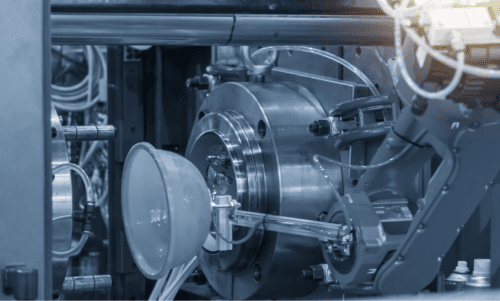 Injection blow molding. In this method, the injection, preforming, and expansion of the plastic material occurs within a single machine before cooling.
- Pre-form injection blow molding. In this method, the injection and preforming of the plastic material occur within one machine. The cold preform is then taken to another machine, where it is enclosed in a mold, heated, stretched, and blown until it reaches the shape of the chosen mold.
The type of injection blow molding process that you choose depends on various factors, including speed and design requirements, production volume, and more.
Injection Blow Molding Applications
Injection blow molding is used to create a variety of products used in our everyday lives. The process results in products of various shapes and sizes that are typically hollow, plastic, and thin-walled. Common examples of injection blow molded products include but are not limited to: